
Growing plants inside a tent requires careful control of the environment. Temperature, airflow, light, and humidity can all affect how well plants grow. When humidity becomes too high, condensation and excess moisture can create an uncomfortable environment and may increase the risk of moisture-related problems.
A compact dehumidifier for a grow tent can help remove excess moisture, particularly when the surrounding room is humid. However, choosing the right size is important because grow tents are usually much smaller than bedrooms or basements.
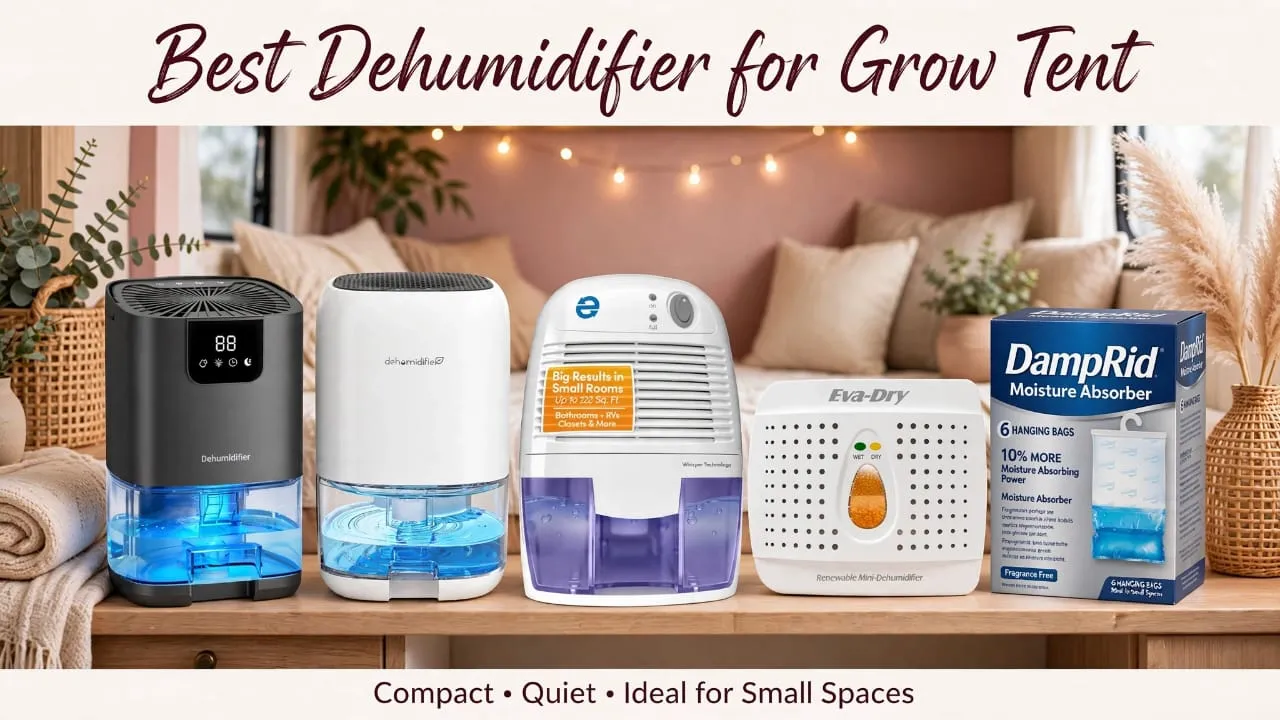
For this guide, I compared five Amazon-listed moisture-control products, ranging from compact electric dehumidifiers to passive moisture absorbers. The goal is to help you choose an option based on tank capacity, portability, noise, automatic shut-off, and the size of your growing area.
Best Grow Tent Dehumidifier Comparison
| Product | Capacity | Main Feature | Best For | Type |
|---|---|---|---|---|
| 35 OZ Small Dehumidifier | 35 oz | Screen display & auto shut-off | Small grow tents | Electric |
| 35 OZ Bedroom/RV Dehumidifier | 35 oz | Quiet operation | Small enclosed spaces | Electric |
| Eva-Dry EDV-1100 | 16 oz | Whisper-quiet & auto restart | Very small tents | Electric |
| Eva-Dry E-333 Wireless | Compact | Wireless operation | Small enclosed areas | Electric |
| DampRid Hanging Moisture Absorber | 15.4 oz × 6 | No electricity required | Passive moisture control | Absorber |
1. 35OZ Small Dehumidifier for Home, 350 Sq. Ft.
The 35OZ Small Dehumidifier is a compact electric option designed for spaces up to approximately 350 square feet. For a grow tent, that coverage is considerably larger than the tent itself, so it can potentially work well when placed in an appropriate surrounding area.
One of its useful features is the screen display, which makes it easier to monitor the unit’s operating status. It also includes automatic shut-off, which helps prevent the unit from continuing to run when the collection tank is full.
Because grow tents have limited space, its relatively compact design can be an advantage.
Key Features
- 35 oz water tank
- Coverage rated up to 350 sq. ft.
- Digital/screen display
- Quiet operation
- Automatic shut-off
- Designed for bedrooms, bathrooms, closets, and RVs
- Compact design
Pros
- Larger tank than many mini dehumidifiers
- Digital display is convenient
- Automatic shut-off
- Suitable for small spaces
- Compact enough for many indoor applications
- Quiet operation
Cons
- May not be powerful enough for a large, extremely humid growing room
- Requires regular tank emptying
- Larger than passive moisture absorbers

Best For
Best for small grow tents where you want an electric dehumidifier with a display and automatic shut-off.
2. 35 OZ Dehumidifier for Bedroom and RV
This second 35-ounce model is another compact option for humidity control. It is marketed for bedrooms and RVs, making its design suitable for relatively small enclosed environments.
For growers, one of the most attractive features is its quiet operation. Grow tents are often located in bedrooms, offices, garages, or other areas where excessive appliance noise can become annoying.
The automatic shut-off feature also provides additional convenience when the water tank becomes full.
Key Features
- 35 oz water capacity
- Quiet operation
- Automatic shut-off
- Compact white design
- Designed for bedrooms and RVs
- Suitable for small spaces
Pros
- Quiet for indoor use
- Good tank capacity for a mini unit
- Compact design
- Automatic shut-off
- Easy to position around a small growing area
Cons
- Limited compared with full-size dehumidifiers
- Tank requires manual emptying
- Not designed for large growing rooms
- Actual moisture removal depends on environmental conditions

Best For
Best for small grow tents where quiet operation and a compact footprint are important.
3. Eva-Dry EDV-1100 Whisper-Quiet Dehumidifier
The Eva-Dry EDV-1100 is one of the smallest options in this comparison. It has a 16-ounce capacity and is designed for small spaces up to approximately 122 square feet.
Its whisper-quiet operation is particularly useful when your grow tent is located in a bedroom or another living area. It also includes automatic shut-off and restart functionality.
Because the unit is very compact, it can be easier to position in a small tent or nearby growing area than a conventional full-size dehumidifier.
Key Features
- 16 oz water tank
- Coverage up to 122 sq. ft.
- Whisper-quiet operation
- Automatic shut-off
- Automatic restart
- Compact design
- Suitable for small enclosed areas
Pros
- Very compact
- Quiet operation
- Easy to move
- Automatic shut-off
- Automatic restart
- Suitable for small spaces
Cons
- Small 16 oz capacity
- Not suitable for large grow rooms
- May need frequent emptying in high humidity
- Limited moisture-removal capacity

Best For
Best for very small grow tents and growers who prioritize quiet operation and portability.
Read also : Best Dehumidifiers for RV(2026)
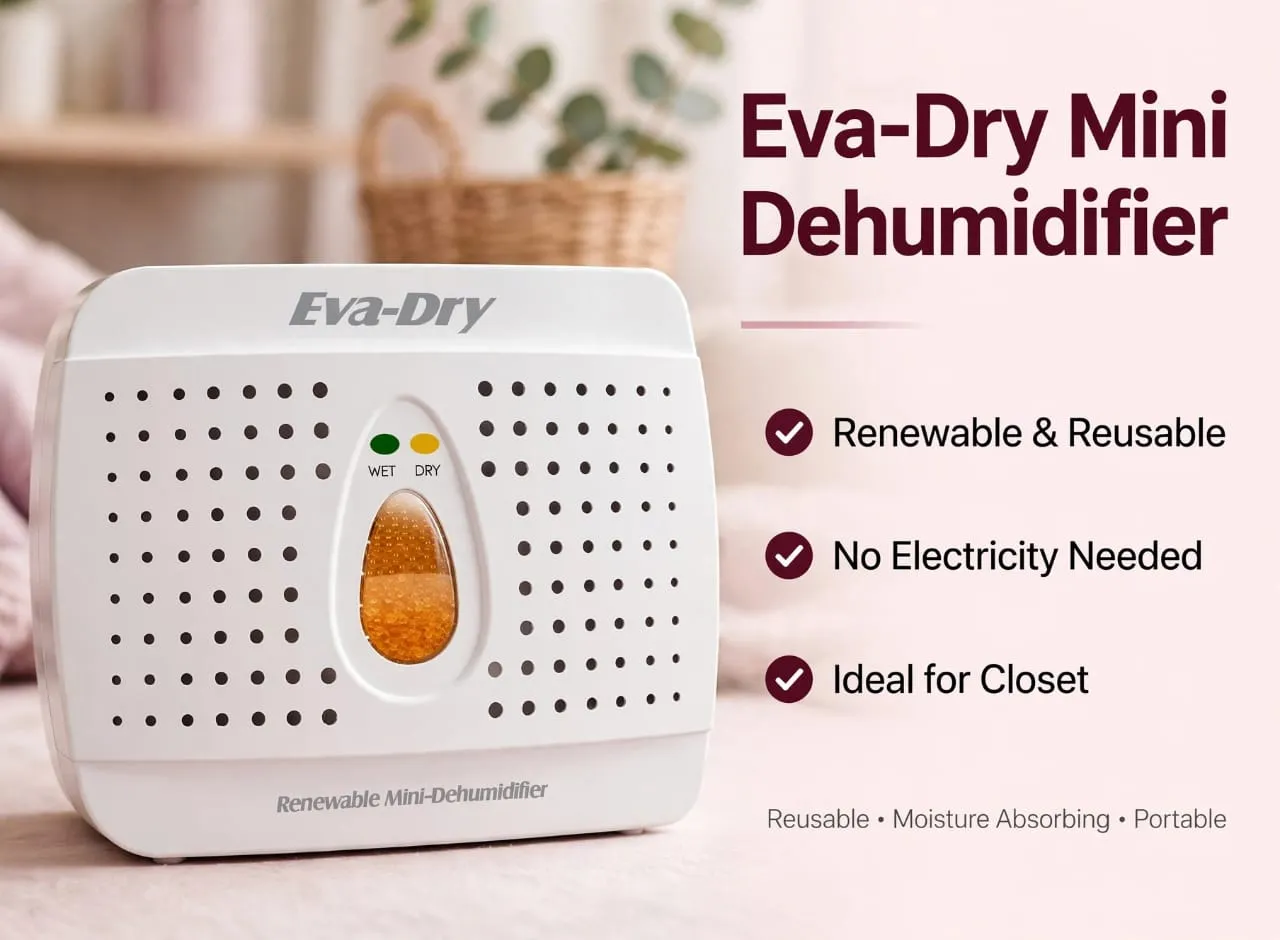
4. Eva-Dry Wireless Mini Dehumidifier E-333
The Eva-Dry Wireless Mini Dehumidifier E-333 offers another compact approach to moisture management. Its wireless design can be particularly convenient for small enclosed areas where you want to avoid dealing with a power cord directly around the unit.
Its compact size makes it easy to move between spaces when necessary. However, as with other mini dehumidifiers, it is more appropriate for relatively small moisture loads rather than severe humidity problems.
For a small grow tent, it may work best as a supplemental moisture-control solution rather than as a replacement for a full-size dehumidifier.
Key Features
- Wireless mini design
- Compact and portable
- Designed for small spaces
- Easy to reposition
- Suitable for moisture control in enclosed areas
Pros
- Convenient wireless design
- Very portable
- Small footprint
- Easy to use
- Useful for small enclosed spaces
Cons
- Limited capacity
- Not intended for large spaces
- May not handle heavy humidity
- Requires appropriate recharging/maintenance
Best For
Best for growers looking for a compact and portable moisture-control solution for a small tent.
5. DampRid Fragrance-Free Hanging Moisture Absorber
Not every grow tent needs an electric appliance. The DampRid Fragrance-Free Hanging Moisture Absorber works differently from the other products in this comparison.
Instead of mechanically removing moisture with electricity, it uses an absorbent material to capture excess moisture from the surrounding air. The hanging design is especially convenient for closets and other enclosed areas.
The six-pack format also allows you to use the absorbers in multiple locations. However, passive absorbers generally shouldn’t be considered a replacement for a powered dehumidifier when humidity levels are significantly elevated.
Key Features
- Fragrance-free formula
- 15.4 oz each
- Six-pack
- Hanging design
- No electricity required
- Helps eliminate musty odors
- Designed for closets and enclosed areas
Pros
- Doesn’t require electricity
- Easy to hang
- Portable
- Useful in small enclosed areas
- No motor noise
- Convenient six-pack
Cons
- Not as powerful as an electric dehumidifier
- Requires replacement
- Not ideal for severe humidity
- Doesn’t provide active airflow or mechanical moisture removal

Best For
Best for passive moisture control in or around small grow tents, closets, and storage spaces.
Conclusion
Choosing the best dehumidifier for a grow tent depends primarily on the size of the growing space and the amount of moisture you need to control.
The 35OZ Small Dehumidifier is a strong all-around option if you want a compact electric unit with a screen display and automatic shut-off. The 35 OZ Bedroom/RV Dehumidifier is another good choice for growers who prioritize quiet operation.
For very small tents, the Eva-Dry EDV-1100 offers an especially compact solution, while the Eva-Dry E-333 provides a convenient wireless mini design. If you prefer an electricity-free approach, DampRid Fragrance-Free Hanging Moisture Absorbers can provide passive moisture control.
Before purchasing, consider your tent dimensions, humidity level, tank capacity, noise requirements, and available space. The right combination of moisture control and proper airflow can help create a more stable environment for your indoor growing setup.
Which Is the Best Dehumidifier for a Grow Tent?
The best choice depends on the size of your tent and how much humidity you need to remove.
For a small grow tent, the 35-ounce electric dehumidifiers offer a good balance between compactness and tank capacity. They can be particularly useful if you want automatic shut-off and quiet operation.
For a very small tent, the Eva-Dry EDV-1100 is worth considering because its compact size and quiet operation make it easy to fit into a limited space.
The Eva-Dry E-333 is another portable choice for growers who prefer a wireless mini design.
Finally, DampRid is useful when you don’t have access to convenient electricity or simply want passive moisture control. It is better viewed as a supplemental option rather than a high-capacity dehumidifier.
How to Choose a Dehumidifier for a Grow Tent
Consider the Tent Size
Start by determining the approximate size of your grow tent. A tiny tent has very different moisture-control requirements from a large growing enclosure.
Avoid automatically choosing the most powerful appliance. A compact unit may be more practical if the humidity problem is relatively minor.
Look at Tank Capacity
Tank capacity matters because a small tank can fill quickly when humidity is high. A 35-ounce model gives you more collection capacity than a 16-ounce mini unit.
If you expect substantial moisture, check whether the unit supports continuous drainage before buying.
Consider Noise
If your grow tent is inside a bedroom or office, noise becomes an important consideration. A whisper-quiet or quiet dehumidifier is generally more comfortable for spaces where people spend a lot of time.
Check Placement Requirements
A dehumidifier needs adequate airflow around its intake and exhaust areas. Don’t squeeze it between equipment or cover its ventilation openings.
Also keep electrical equipment away from water, spills, and areas where condensation could accumulate.
Don’t Ignore Ventilation
A dehumidifier isn’t the only factor in managing humidity. Proper ventilation and air circulation can also play important roles in maintaining a stable growing environment.
What is the best dehumidifier for a grow tent?
For a small grow tent, a 35-ounce compact electric dehumidifier is a practical starting point because it combines a relatively useful tank capacity with quiet operation and automatic shut-off. For very small tents, the Eva-Dry EDV-1100 is another compact option.
Will a dehumidifier work in a tent?
Yes, a properly sized dehumidifier can remove moisture from the air around a grow tent and can be useful when humidity is too high. However, effectiveness depends on the tent size, surrounding room conditions, ventilation, and the amount of moisture being produced.
What can I use instead of a dehumidifier?
For mild moisture problems, you can use passive moisture absorbers such as DampRid. Improving ventilation and airflow can also help manage excess moisture. However, passive absorbers generally have much less moisture-removal capacity than powered dehumidifiers.
Where not to place a dehumidifier?
Avoid placing a dehumidifier where its air vents are blocked, where it can be exposed to splashing water, or where collected water could spill onto electrical equipment. Keep adequate clearance around the unit and place it on a stable, level surface.



1 Comment
[…] Read also : Best Dehumidifier for Grow Tent (2026) […]
Your comment is awaiting moderation.
[…] Also read : Best Dehumidifier for Grow Tent (2026) […]