
Mold flourishes in wet and humid conditions. An increase in moisture in the home can also spread unwanted bacteria or mold. A good dehumidifier can reduce the humidity in the basement, dehumidifier bathroom, bedroom, garage, or anywhere you have moisture.
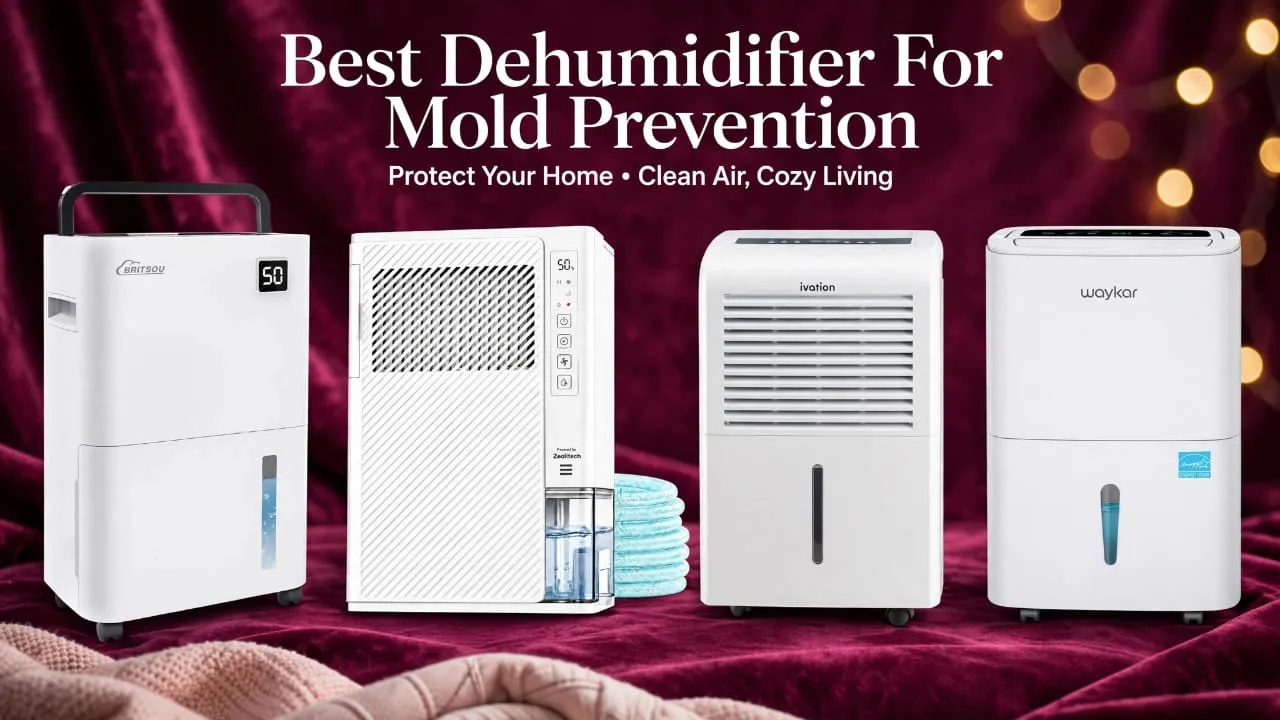
I will choose four different dehumidifiers from Amazon that work in completely different ways to get the task done. The first dehumidifier is the 50 Pint Dehumidifier (3500 Sq Ft area) and the other on the list dehumidifiers is the AEOCKY 2000 Sq.Ft Rotary Desiccant Dehumidifier, the Ivation 50 Pint Dehumidifier with Pump, and the Waykar 80 Pint 2025 Energy.
With variety of models to meet a variety of situations – the strongest model is sometimes not the best choice for home. It is essential to consider your room size, humidity level, drainage requirements, temperature, and budget.
Quick Comparison
| Product | Coverage | Type | Best For |
|---|---|---|---|
| 50 Pint Dehumidifier | Up to 3,500 sq. ft. | Compressor | Basements, bedrooms and garages |
| AEOCKY Rotary Desiccant | Up to 2,000 sq. ft. | Desiccant | Cold and humid spaces |
| Ivation 50 Pint | Up to 4,500 sq. ft. | Compressor | Basements requiring drainage |
| Waykar 80 Pint | Up to 5,000 sq. ft. | Compressor | Large rooms and basements |
1. 50 Pint Dehumidifier for Basement and Bedroom, 3,500 Sq. Ft.
The 50 Pint Dehumidifier is currently the most versatile choice if a homeowner wants to extract moisture from a medium-to-large space. According to the manufacturer, it can control space up to 3,500 square feet and it can be useful in a lot of places like the basement, bedroom, bathroom, garage, or bigger living room. If humidity is persistent, the drain hose will come as useful device feature.
If permitted during installation, users may connect the hose for continuous drainage instead of solely relying on the indoor water tank. Its three modes of operation mean that it can be used for many things. In most instances, it is better to keep indoor humidity consistent than to switch on a dehumidifier occasionally to prevent mold growth.
Key Features
- 50-pint moisture-removal capacity
- Coverage advertised up to 3,500 square feet
- Drain hose included
- Three operating modes
- Suitable for basements and bedrooms
- Designed for bathrooms and garages
- Smart operation
- Portable design
Pros
- Good capacity for medium-to-large spaces
- Suitable for several areas around the home
- Drain hose can simplify continuous drainage
- Three modes provide flexibility
- Useful for humid basements
- More powerful than small bedroom dehumidifiers
Cons
- May be oversized for a small bedroom
- Requires electrical power
- Drainage setup may require some planning
- Water tank may still need monitoring if the hose isn’t used

Best For
Best for homeowners who need a versatile 50-pint dehumidifier for a basement, garage, bedroom, bathroom, or other medium-to-large space.
2. AEOCKY 2000 Sq.Ft Rotary Desiccant Dehumidifier
The AEOCKY 2000 Sq.Ft Rotary Desiccant Dehumidifier working uses rotary desiccant technology instead of a typical compressor system for moisture control.
Warm Mist dehumidifier is conducive in colder areas. Since the temperature declines, the compressor types may not prove very effective, while the desiccant technology can play an instrumental role in controlling moisture in the cooler temperatures.
Using the humidistat to monitor humidity is the best feature that enhances the response of the unit. A good humidistat will use the conditions of moisture to tailor the unit’s output. Thus the unit will not simply run continuously no matter how dry or humid the room is.
Key Features
- Rotary desiccant technology
- Coverage advertised up to 2,000 square feet
- Built-in humidistat
- Never-Frost design
- Suitable for colder environments
- Designed for moisture control
- Useful for basements and other enclosed spaces
Pros
- Desiccant technology can work well in cooler conditions
- Never-Frost design is useful for cold environments
- Built-in humidistat
- Suitable for medium-sized areas
- Good alternative to traditional compressor models
Cons
- Different operating characteristics compared with compressor models
- May consume more electricity depending on operating conditions
- Not necessary for every warm residential space
- Coverage may vary depending on humidity and temperature

Best For
Best for colder basements, garages, and other spaces where traditional compressor dehumidifiers may have difficulty maintaining efficient moisture removal.
Read also : Best Dehumidifier for 1000 Sq Ft Home 2026
3. Ivation 50 Pint Dehumidifier for Basement with Pump and Drain Hose
Ivation 50 Pint Dehumidifier is Ideal for Bigger Homes. The Ivation Company features a dehumidifier specifically designed for the basement application which is very interesting.
It is said to be effective in 4,500 sq ft area. Here’s what you’ll find in the box. A built-in pump can be helpful if you need to drain it to a point above the dehumidifier.
This type of arrangement could be an option for those who have continuous moisture in their basements for whom the tank emptying does not have to be a manual process.
Key Features
- 50-pint capacity
- Coverage advertised up to 4,500 square feet
- Built-in pump
- Drain hose
- Designed for basement use
- Suitable for larger spaces
- Continuous drainage capability
- Portable design
Pros
- Good capacity for larger residential spaces
- Built-in pump adds drainage flexibility
- Drain hose included
- Particularly useful for basements
- Reduces the need for frequent manual emptying
- Suitable for larger areas
Cons
- Larger than compact household models
- Requires an electrical connection
- Pump drainage requires suitable installation
- May be unnecessary for small rooms

Best For
Best for large basements and other areas where continuous drainage is important.
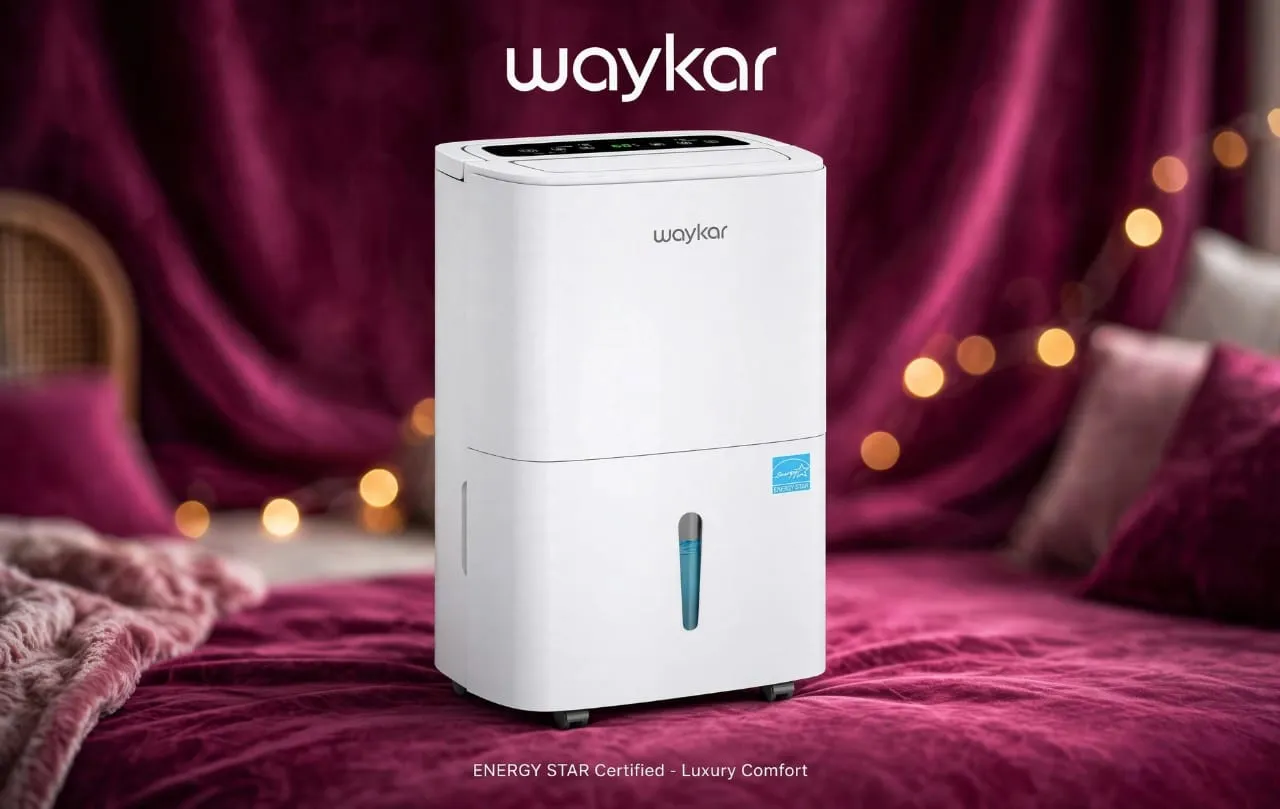
4. Waykar 80 Pints 2025 Energy Star Dehumidifier
In this comparison, the Waykar 80 Pint 2025 Energy Star Dehumidifier is the highest-capacity model. It is promoted for residences and spaces measuring 5,000 sq. ft. or less.
This presents a very strong option for larger basements, bathrooms, garages, and very large rooms. This model is suitable for moisture-control situations due to some features.
It has a drain hose, automatic defrosting, and self-drying feature. In frost-prone times, auto-defrost will kick in. When selecting the top dehumidifier for a crawl space, you will want to pay attention to the features the most.
Key Features
- 80-pint capacity
- Coverage advertised up to 5,000 square feet
- Energy Star design
- Drain hose
- Auto-defrost
- Self-drying function
- Portable construction
- Suitable for basements and large rooms
Pros
- Highest capacity among these four products
- Suitable for large areas
- Auto-defrost helps in cooler conditions
- Drain hose supports continuous drainage
- Self-drying feature adds convenience
- Good option for large basements
Cons
- Larger than necessary for small rooms
- Higher capacity may mean a higher purchase price
- Requires suitable drainage for continuous operation
- Needs regular maintenance for optimal performance
Best For
Best for large basements, garages, bathrooms, and homes with significant humidity problems.
Which Dehumidifier Is Best for Mold Prevention?
The best dehumidifier for mold prevention is the one that can maintain an appropriate humidity level for the size and conditions of your space.
Among these four options, the Waykar 80 Pint model is the strongest choice for a large and consistently humid area because of its higher advertised capacity and features such as auto-defrost and continuous drainage.
For a medium-to-large basement, the Ivation 50 Pint model is another strong option, especially if you need a built-in pump for drainage.
The AEOCKY rotary desiccant model is worth considering when your space is particularly cold. For more typical residential conditions, the 50-pint compressor model can provide a balanced option.
Remember that a dehumidifier helps prevent conditions that encourage mold growth, but it does not remove existing mold.
Are Dehumidifiers Good to Prevent Mold?
Yes. Dehumidifiers can help prevent mold by reducing excess moisture in the air.
Mold needs moisture to grow, so controlling indoor humidity is an important part of mold prevention. A dehumidifier can be particularly helpful in areas such as basements, bathrooms, laundry rooms, and garages where humidity levels can become elevated.
For the best results, don’t simply run the dehumidifier whenever the room feels damp. A model with humidity control or a built-in humidistat can help maintain a more consistent humidity level.
It is also important to address other moisture sources, such as plumbing leaks, roof leaks, condensation, or poor ventilation.
Will a Dehumidifier Take Away Mold?
No. A dehumidifier does not remove existing mold.
A dehumidifier’s job is to reduce moisture and humidity. This can make the environment less favorable for mold growth, but existing mold on walls, ceilings, floors, furniture, or other materials needs to be properly cleaned or professionally remediated depending on the extent of the problem.
If you already have visible mold, first address the moisture source. Otherwise, mold may continue to return even after using a dehumidifier.
A dehumidifier is therefore better viewed as part of a mold-prevention strategy rather than a mold-removal appliance.
What Is Better for Mold, a Dehumidifier or Air Purifier?
A dehumidifier and an air purifier perform different jobs, so neither is automatically better for every mold-related problem.
A dehumidifier reduces excess moisture in the air. This helps address one of the environmental conditions that allows mold to grow.
An air purifier, particularly one equipped with an appropriate HEPA filtration system, is designed to filter airborne particles. It can be useful for improving indoor air quality, but it does not solve the underlying moisture problem.
If your primary concern is preventing mold growth caused by high humidity, a dehumidifier is generally the more important appliance. If you also want to address airborne particles, using an air purifier alongside appropriate humidity control may provide a more comprehensive approach.
How to Choose the Best Dehumidifier for Mold Prevention
Before buying a dehumidifier, consider several factors.
Room Size
Always compare the manufacturer’s recommended coverage with your actual room size. A small dehumidifier may struggle in a large basement, while an oversized unit may be unnecessary for a small bedroom.
Humidity Level
A mildly humid bedroom and a constantly damp basement have very different requirements. Higher humidity usually calls for a more capable dehumidifier.
Drainage
If you expect the unit to operate for long periods, continuous drainage can be extremely useful. Drain hoses and built-in pumps can reduce the need to repeatedly empty the water tank.
Temperature
Temperature matters when selecting a dehumidifier. If you plan to use the appliance in a cold basement or garage, consider a model with auto-defrost or a desiccant design.
Humidity Control
A humidistat or automatic humidity control can make operation easier by allowing the dehumidifier to respond to changing moisture levels.
Maintenance
Filters, water tanks, drain hoses, and other components require maintenance. Keeping the unit clean can help it operate effectively over time.
Final Conclusion
Choosing the best dehumidifier for mold prevention starts with controlling the moisture problem rather than simply choosing the largest appliance available.
The Waykar 80 Pint 2025 model is the strongest option in this comparison for large, humid areas because of its high advertised capacity, drain hose, auto-defrost, and self-drying features. The Ivation 50 Pint is another excellent choice for larger basements, particularly when a built-in pump and continuous drainage are important.
The 50 Pint 3,500-square-foot model provides a balanced option for medium-to-large spaces, while the AEOCKY 2000 Sq.Ft Rotary Desiccant Dehumidifier is particularly interesting for colder environments where desiccant technology can be advantageous.
Most importantly, remember that dehumidifiers help control moisture; they do not remove existing mold. For effective mold prevention, combine humidity control with good ventilation, prompt repair of leaks, proper cleaning, and regular monitoring of moisture levels. This approach can help create a drier indoor environment and reduce the conditions that allow mold to return.
Frequently Asked Questions
1. Which dehumidifier is best for getting rid of mold?
A high-capacity dehumidifier such as the Waykar 80 Pint can be a good choice for large, humid areas because it is designed to remove excess moisture. However, a dehumidifier does not actually remove existing mold; it helps control the moisture that allows mold to grow.
2. Are dehumidifiers good to prevent mold?
Yes. Dehumidifiers can help prevent mold by reducing excess humidity. They are particularly useful in basements, bathrooms, garages, and other areas where moisture tends to accumulate.
3. Will a dehumidifier take away mold?
No. A dehumidifier cannot remove existing mold from walls, ceilings, furniture, or other surfaces. It reduces humidity and can help prevent mold from spreading or returning after the underlying moisture problem has been addressed.
4. What is better for mold, a dehumidifier or air purifier?
A dehumidifier is generally more important when the main problem is high humidity because it addresses excess moisture. An air purifier can help filter airborne particles but does not eliminate the moisture that encourages mold growth. In some homes, using both can provide complementary benefits.
5. What humidity level should I maintain to prevent mold?
Keeping indoor relative humidity below about 60% can help discourage mold growth, while a range around 30–50% is commonly recommended for indoor humidity control. A dehumidifier with a built-in humidistat can make it easier to maintain a consistent level.
6. Can I use a dehumidifier in a basement to prevent mold?
Yes. Basements are often prone to excess moisture, making them a common place for dehumidifiers. Choose a model based on the basement’s size, humidity level, temperature, and drainage requirements.
7. How long should I run a dehumidifier to prevent mold?
There is no single running time that works for every home. A humidistat-controlled dehumidifier can run automatically and cycle on and off as needed to maintain the desired humidity level.
8. Do I need a dehumidifier if I already have an air purifier?
If your home has high humidity, an air purifier alone will not solve the moisture problem. A dehumidifier can reduce excess moisture, while an air purifier can help filter airborne particles, so the two appliances can serve different purposes.



1 Comment
[…] Read also : Best Dehumidifier for Mold Prevention (2026) […]