Does your basement have a high level of humidity? Do you realize that it might feel uncomfortable? Mildew smells, condensation, and some other moisture-associated problems could happen in a damp cellar. A properly sized dehumidifier can help reduce humidity levels in your home to make your environment more comfortable. Despite this, selecting the appropriate model can be challenging. This to a greater extent the case when one realizes de.
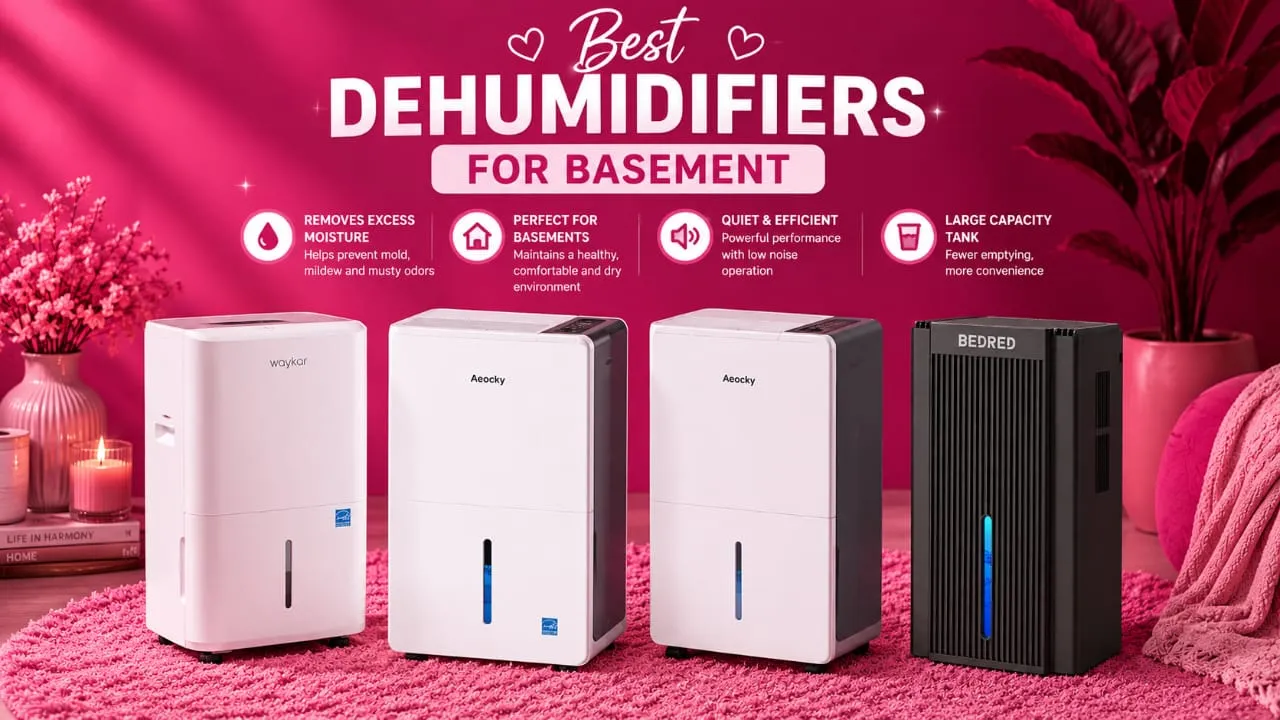
This guide looks at four good options for different degree levels and room sizes. What’s inside Waykar 80 Pints 5000 Sq? Ft. AEOCKY 50 Pint/Day 3500 Sq. Dehumidifier Ft. AEOCKY 6000 Square Feet Compressor Dehumidifier Ft. Energy Star Most Efficient 105 pints per day dehumidifier and a compact dehumidifier for homes up to 950.
The applications of these models vary by dimension but can apply to small bedrooms and living rooms to large basements and even whole home applications. We will take a look at their main features, pros and cons, best applications, and buying tips.
Quick Comparison
| Product | Coverage | Capacity | Best For |
|---|---|---|---|
| Waykar 80 Pint | Up to 5,000 sq. ft. | 80 pints/day | Large basements |
| AEOCKY 50 Pint | Up to 3,500 sq. ft. | 50 pints/day | Medium-large spaces |
| AEOCKY 105 Pint | Up to 6,000 sq. ft. | Up to 105 pints/day | Very large basements |
| 95OZ Dehumidifier | Up to 1,000 sq. ft. | 95 oz. tank | Small rooms |
1. Waykar 80 Pints 5000 Sq. Ft. 2025 Energy Star Dehumidifier
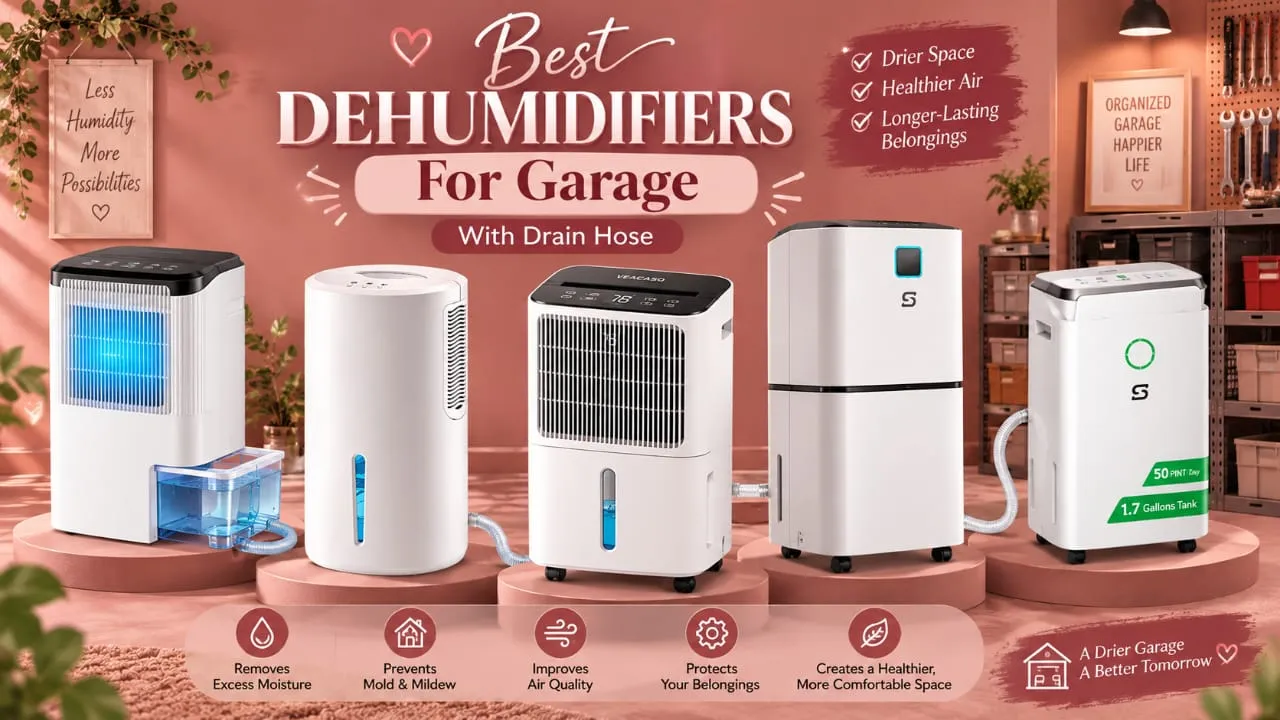
Homeowners who seek powerful moisture control in large areas will find the Waykar 80 Pint Dehumidifier effective. With a coverage advertised up to 5,000 square feet, it can work well for large basements, garages, living areas and other big parts of your home.
The ability of this model to remove moisture is significantly higher than that of the smaller bedroom dehumidifiers, thanks to its 80-pint capacity. It’s a worthy consideration for places like basements with high humidity for long periods.
Alternative features which prove to be more advantageous are point drainage. Continuous drainage eliminates the necessity of removing water from the water collection tank if connected to a suitable drain.
Key Features
- 80-pint moisture-removal capacity
- Advertised coverage of up to 5,000 sq. ft.
- Designed for large rooms and basements
- Energy Star-focused design
- Drain hose capability
- Suitable for extended humidity control
- Appropriate for large residential spaces
Pros
- High capacity for large spaces
- Good coverage for large basements
- Continuous drainage can improve convenience
- Suitable for homes, garages, and basements
- More powerful than compact household models
Cons
- May be excessive for small rooms
- Requires more floor space than compact models
- Manual tank emptying may still be required without continuous drainage
- Higher capacity may not be necessary for lightly humid spaces

Best For
Large basements, garages, and spacious homes with moderate to high humidity.
2. AEOCKY 50 Pint/Day, 3500 Sq. Ft. Compressor Dehumidifier
The AEOCKY 50 Pint/Day Compressor Dehumidifier is a reliable choice for medium-to-large spaces that needs humidity control. The heat requires up to 3500 square footage to cover. Thus, in a basement install, you can install it in the mid basement.
The size accommodates a good compromise. While it provides more capacity than a compact room dehumidifier, the 80- and 105-pint-capacity units are more than what a room dehumidifier will see as necessary, ballpark way.
In case you will be using the dehumidifier for long times, the drain hose that came with it is useful. Water can drain into a proper drainage system when the hose is installed appropriately through continues drainage. It prevents the collection tank from being repeatedly removed.
Key Features
- 50-pint/day capacity
- Advertised coverage up to 3,500 sq. ft.
- Compressor-based design
- Drain hose included
- Suitable for medium and large rooms
- Designed for basement and household humidity control
- Practical option for regular operation
Pros
- Good balance between capacity and coverage
- Suitable for medium-to-large spaces
- Drain hose adds convenience
- More manageable capacity than very large models
- Suitable for basement applications
Cons
- May not be powerful enough for extremely large basements
- Smaller coverage than the 80- and 105-pint models
- Continuous drainage requires suitable installation
- Not ideal for very small spaces where a compact unit would be sufficient

Best For
Medium-to-large basements, apartments, living rooms, and areas with regular humidity problems.
Read also : Best Dehumidifier for Mold Prevention (2026)
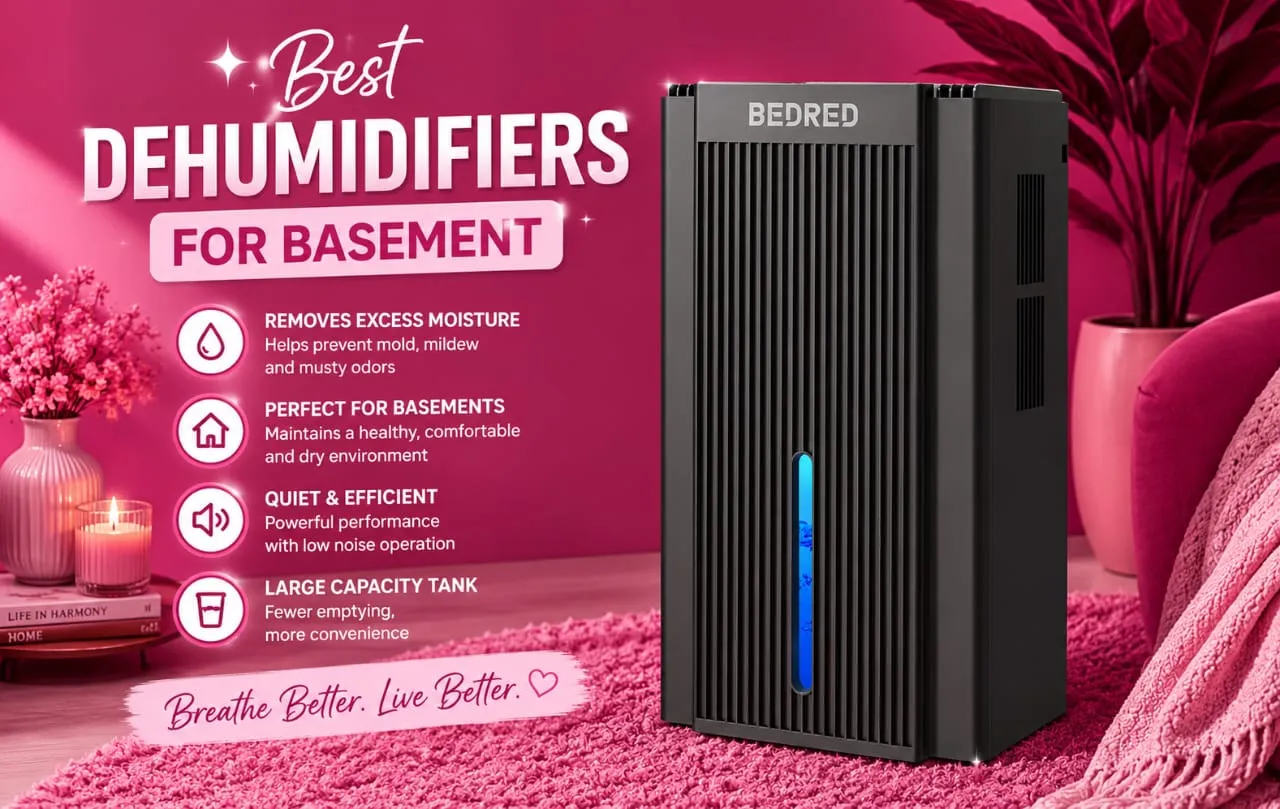
3. AEOCKY 6000 Sq. Ft. Energy Star Most Efficient 2024 Dehumidifier
In this comparison, the AEOCKY 6000 Sq is peak capacity choice. Ft Dehumidifier. Use Sensor Smart technology to optimize extraction performance, improve energy efficiency and save money. Great for basements up to 6,000 sq. ft and 105 pint removal capacity.
If moisture within the space is a problem a high capacity unit may be more appropriate then a small unit that is working constantly Due to its high capacity, it is ideal for use in large basements and whole houses.
Homeowners might consider Energy Star Most Efficient designation if they expect their dehumidifier will run regularly. It is vital for an appliance that runs for many hours of the day to be energy efficient.
Key Features
- Up to 105-pint/day capacity
- Advertised coverage up to 6,000 sq. ft.
- Energy Star Most Efficient positioning
- Designed for large and humid areas
- Suitable for basement and whole-home applications
- High-capacity moisture removal
- Intended for demanding humidity-control needs
Pros
- Highest capacity among the four models
- Excellent advertised coverage
- Suitable for very large basements
- Appropriate for demanding humidity conditions
- Energy-efficiency focused
- Can be considered for whole-home applications
Cons
- May be unnecessary for smaller rooms
- Requires more space than compact dehumidifiers
- Higher capacity may come with a higher purchase price
- Proper placement is important for effective airflow

Best For
Very large basements, large homes, and spaces with significant humidity problems.
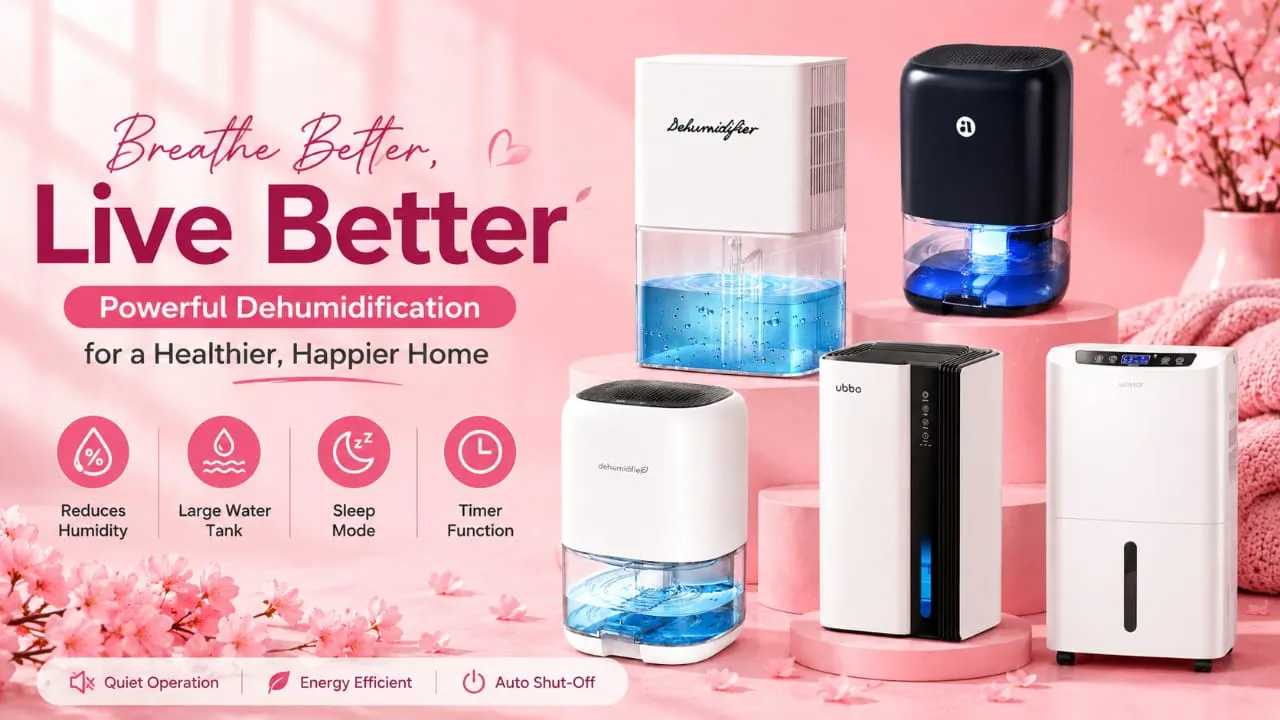
4. 95OZ Dehumidifier for Home 1000 Sq. Ft.
The 950Z Dehumidifier is not for the types of users that those first two products are designed for. This unit is targeted for smaller areas of approximately up to 1,000 sq.ft. instead of excessively high moisture removal capacity.
In addition, the high-performance compressor of the Visual Comfort AFD50 area dehumidifier is coupled with two refrigerant coils. It is capable of functioning efficiently at a temperature of 41 degrees in a performance. It helps save energy and reduces noise thanks to its Power ECO Mode that detects humidity levels.
The the dehumidifier has seven color ambient lighting, giving this model a more lifestyle focused design compared to heavy duty basement dehumidifiers.
Key Features
- Advertised coverage up to 1,000 sq. ft.
- 95-ounce water tank
- Auto shut-off
- Quiet operation
- Seven-color ambient lighting
- Compact design
- Suitable for bedrooms and smaller living areas
Pros
- Compact and convenient
- Suitable for smaller rooms
- Quiet operation
- Auto shut-off provides convenience
- Ambient lighting adds a decorative feature
- Easier to place than large basement models
Cons
- Not suitable for very large basements
- Lower capacity than the other three models
- Water tank may need frequent emptying in humid conditions
- Not designed for whole-home humidity control
Best For
Bedrooms, bathrooms, offices, living rooms, and small basement areas.
Which Dehumidifier Is Best for a Basement?
The best dehumidifier depends on the size of your basement and how much moisture you need to remove.
For a very large basement, the AEOCKY 105 Pint model is the strongest option in this comparison based on its advertised coverage and capacity. Its 6,000-square-foot coverage and up to 105-pint capacity make it suitable for demanding applications.
The Waykar 80 Pint is another strong option for large basements. With advertised coverage of up to 5,000 square feet, it provides substantial capacity without reaching the highest level of the AEOCKY model.
For medium-to-large basements, the AEOCKY 50 Pint is a practical choice. It offers up to 3,500 square feet of advertised coverage and can be a better fit when an extremely high-capacity unit is unnecessary.
For smaller basement areas, bedrooms, and individual rooms, the 95OZ model may be more suitable.
How to Choose the Best Basement Dehumidifier
Check the Basement Size
Start by measuring the approximate area you want to dehumidify. A small unit designed for 1,000 square feet may not be appropriate for a basement several times larger.
The advertised coverage should be used as a starting point because actual performance can vary depending on temperature, humidity, insulation, airflow, and the layout of the space.
Consider Humidity Levels
A slightly humid basement does not necessarily require the same capacity as a basement experiencing significant moisture. If your basement is consistently damp, a higher-capacity model may be worth considering.
Look for Continuous Drainage
Continuous drainage can be especially useful in basements because dehumidifiers may collect considerable amounts of water. A drain hose can reduce the need to repeatedly empty the tank when a suitable drainage setup is available.
Consider Energy Efficiency
If the dehumidifier will run frequently, energy efficiency becomes an important consideration. Energy-efficient models may help reduce electricity consumption over time compared with less efficient alternatives.
Think About Noise
For a basement, moderate operating noise may not be a major concern. However, if you plan to use the appliance in a bedroom, office, or living room, quiet operation becomes more important.
Choose the Right Capacity
Do not automatically choose the biggest dehumidifier available. A 105-pint model may be unnecessary for a small room, while a compact unit may struggle in a large, humid basement.
The goal is to match the dehumidifier’s capacity and advertised coverage with the actual conditions of your space.
Final Verdict
The best high-capacity dehumidifier depends on your space, humidity level, and preferred features.
The AEOCKY 105 Pint is the most powerful choice in this comparison based on its advertised capacity and coverage. It is best suited to very large basements and demanding humidity-control situations.
The Waykar 80 Pint is a strong choice for large basements and homes with substantial moisture. Its advertised 5,000-square-foot coverage makes it suitable for many larger residential spaces.
The AEOCKY 50 Pint is a good middle-ground option for medium-to-large spaces. It offers substantial capacity without going as high as the 80- and 105-pint models.
The 95OZ Dehumidifier is better suited to smaller rooms and individual areas where compact size and quiet operation are more important than maximum moisture removal.
Before buying, compare the advertised coverage, capacity, drainage options, energy efficiency, noise level, and your actual basement conditions. Choosing the appropriately sized model can make humidity management more practical and efficient.
Frequently Asked Questions
1. What size dehumidifier is best for a basement?
The ideal size depends on the basement’s square footage, humidity level, temperature, and airflow. Larger or very humid basements generally require higher-capacity models.
2. Is an 80-pint dehumidifier good for a large basement?
Yes. An 80-pint dehumidifier can be a good option for a large basement when its advertised coverage is appropriate for the size and conditions of the space.
3. Is a 105-pint dehumidifier too powerful for a basement?
It can be unnecessary for a small or moderately humid basement. However, for a very large or highly humid basement, the additional capacity can be useful.
4. Which is better, a 50-pint or 80-pint dehumidifier?
An 80-pint model generally offers greater moisture-removal capacity, while a 50-pint model may be sufficient for a medium-sized space. Choose according to your basement’s size and humidity level.
5. How often should a basement dehumidifier run?
Operation depends on the humidity level and the desired humidity setting. Many modern units use a humidistat to cycle the appliance as needed rather than operating continuously.
6. Is continuous drainage important for basement dehumidifiers?
Continuous drainage can be very convenient in a humid basement. It can reduce the need to manually empty the water tank when the unit is properly connected to a suitable drain.
7. Can a dehumidifier prevent mold in a basement?
A dehumidifier does not remove existing mold, but controlling excessive humidity can help create an indoor environment that is less favorable to mold growth.
8. Can I use a 95OZ dehumidifier in a basement?
Yes, if the basement or area being treated is relatively small and within the unit’s advertised coverage. It would not be the appropriate choice for a very large basement.
9. What humidity level should a basement have?
A commonly recommended indoor relative humidity range is around 30% to 50%. A dehumidifier can help maintain a more comfortable humidity level when moisture is excessive.
10. Should I buy the largest dehumidifier available?
No. The largest model is not automatically the best model. Select a dehumidifier based on the size of the space, humidity conditions, drainage needs, energy efficiency, and intended use.