
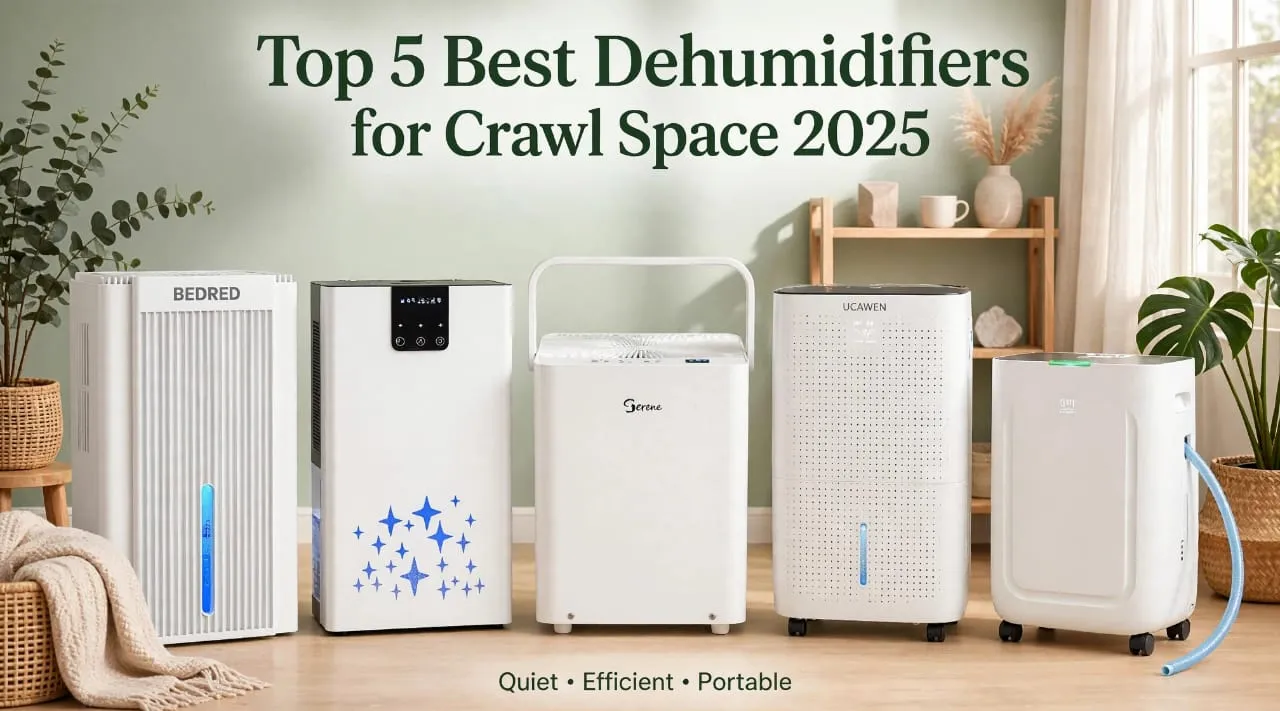
A damp crawl space can create moisture problems throughout your home. Excess humidity may contribute to condensation, musty odors, mold growth, and damage to wood and stored materials. A properly sized dehumidifier with reliable drainage can help keep crawl-space humidity under control.
Below are five Amazon products you provided, compared for capacity, coverage, drainage, convenience, and suitability for crawl spaces.
Quick Comparison
| Product | Advertised Coverage | Key Features | Best For |
|---|---|---|---|
| Ludatido 80 Pint/Day | Up to 5,000 sq. ft. | 80-pint capacity, whole-home design | Large crawl spaces |
| 95 OZ Dehumidifier | Up to 1,000 sq. ft. | Quiet, auto shutoff, compact | Small crawl spaces |
| Midea Cube 50 Pint | Up to 4,500 sq. ft. | ENERGY STAR, smart control | Large crawl spaces |
| Waykar 150 Pint | Up to 7,000 sq. ft. | Drain hose, 150-pint capacity | Very large crawl spaces |
| 95 OZ Water Tank Dehumidifier | Up to 1,000 sq. ft. | Sleep mode, auto shutoff, 7-color light | Small spaces |
1. Ludatido 2025 Upgraded Dehumidifier, 80 Pint/Day, 5,000 Sq. Ft.
The Ludatido 80-pint/day dehumidifier is designed for large areas and is advertised for spaces up to 5,000 square feet. That makes it a much more suitable option for a large crawl space than a small bedroom-style dehumidifier.
Crawl spaces can hold significant amounts of moisture, particularly when the ground, foundation walls, or ventilation allow humidity to enter. A higher-capacity unit can remove more moisture from the air and help maintain a more controlled environment.
The whole-home and basement positioning also makes this model versatile. If you have a large crawl space with persistent humidity, this type of higher-capacity dehumidifier is worth considering.
Key Features
- 80-pint/day advertised capacity
- Up to 5,000 sq. ft. advertised coverage
- Designed for whole-home and basement use
- High-capacity moisture removal
- Suitable for large spaces
- Portable design
Pros
- High moisture-removal capacity
- Large advertised coverage
- Suitable for large crawl spaces
- More powerful than mini dehumidifiers
- Useful for basements and whole-home applications
Cons
- Too large for a small crawl space
- May use more electricity than compact models
- Requires appropriate drainage for long-term operation
- Larger footprint

Best For
Best for large crawl spaces and homes with substantial moisture problems.
2. 95 OZ Dehumidifier for Home, 1,000 Sq. Ft.
The 95-ounce dehumidifier is a compact alternative for smaller crawl spaces. It is advertised for areas up to 1,000 square feet and is designed for home applications.
Its smaller size can make it easier to position in a tight crawl space. This is an important consideration because crawl spaces often have limited access and restricted floor area.
However, a small unit may not be enough for a crawl space with serious moisture intrusion. If the area has standing water, heavy condensation, or consistently high humidity, a larger crawl-space-capable unit would generally be a better choice.
Key Features
- 95-ounce water tank
- Up to 1,000 sq. ft. advertised coverage
- Compact design
- Designed for home use
- Automatic shutoff
- Quiet operation
Pros
- Compact
- Easy to position
- Suitable for smaller areas
- Convenient automatic shutoff
- Good for moderate humidity
Cons
- Small water capacity
- Not ideal for severe moisture problems
- May require frequent emptying
- Less powerful than 50- to 150-pint models

Best For
Best for small crawl spaces with moderate humidity.
Read also : Best Quiet Dehumidifier for Bedroom
3. Midea Cube 50 Pint Dehumidifier, 4,500 Sq. Ft.
The Midea Cube 50 Pint Dehumidifier is one of the most recognizable products in this group. It is advertised for up to 4,500 square feet and includes smart-control functionality and ENERGY STAR certification.
Its cube-style design is particularly useful when storage space matters. The unit can be configured in different ways, and the larger water collection capacity can reduce the need for frequent emptying.
For crawl-space applications, however, drainage and temperature conditions are especially important. Before installation, check the manufacturer’s operating requirements and ensure the unit is positioned safely with appropriate airflow.
Key Features
- 50-pint capacity
- Up to 4,500 sq. ft. advertised coverage
- ENERGY STAR certified model
- Smart controls
- Cube-style design
- Large water collection capacity
- Suitable for basements and large spaces
Pros
- Strong capacity
- Large advertised coverage
- Smart controls
- Energy-efficient design
- Space-efficient design
- Good for larger damp areas
Cons
- May be too large for small crawl spaces
- Crawl-space temperatures may affect performance
- Requires proper drainage
- Higher price than mini models

Best For
Best for large crawl spaces and homeowners who want smart controls and energy-efficient operation.
4. Waykar 150 Pint 7,000 Sq. Ft. Dehumidifier
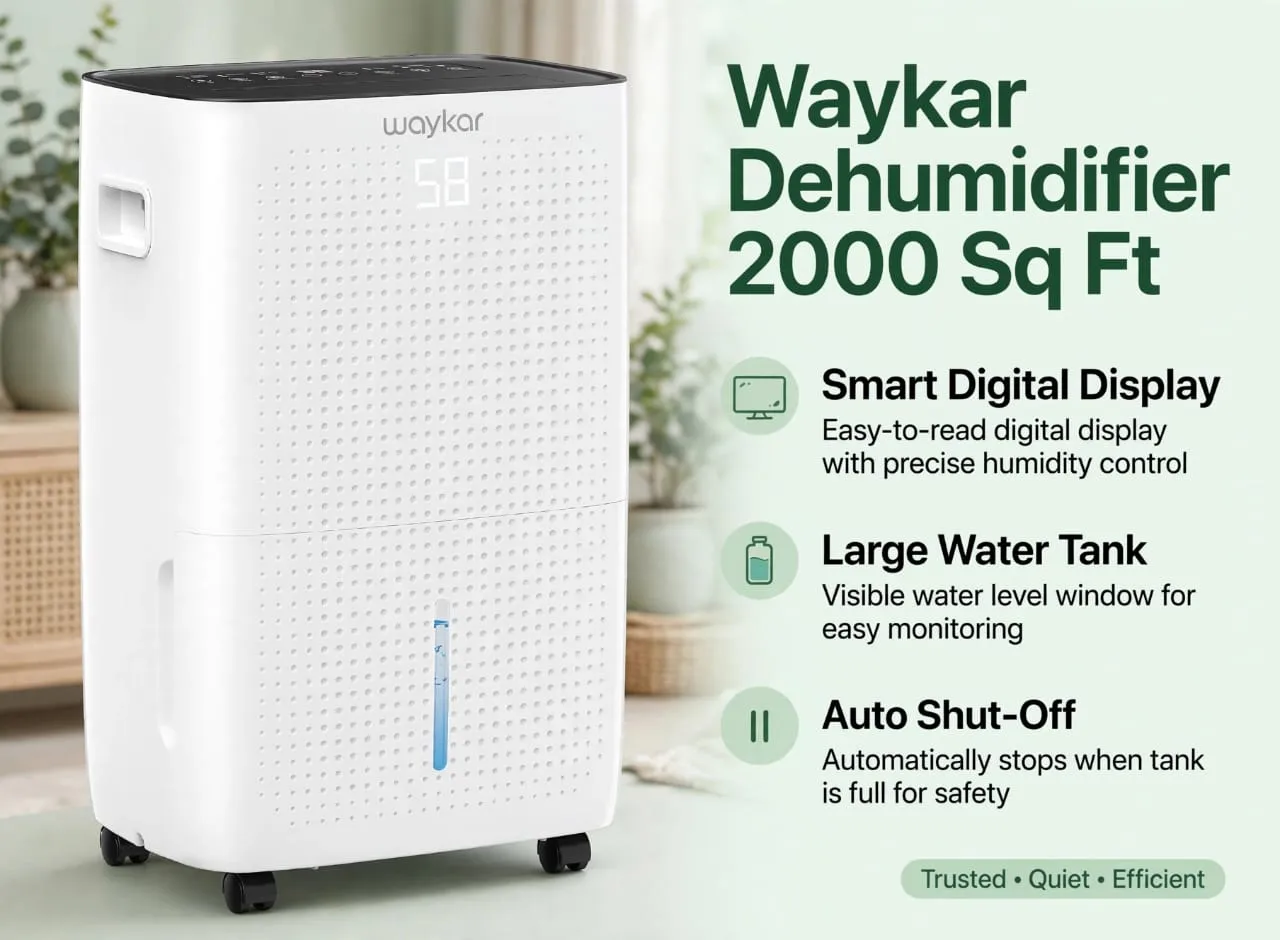
If you’re dealing with an exceptionally large crawl space or serious moisture problem, the Waykar 150-pint model is the most powerful option in this list.
It is advertised for up to 7,000 square feet and includes both a water tank and drain hose. The high-capacity design is intended for demanding environments where a standard household dehumidifier may not be sufficient.
The drain hose is particularly important for crawl spaces. Once the unit is positioned in an area that’s difficult to access, manually emptying a water tank can become inconvenient. Continuous drainage can make long-term operation considerably easier.
Key Features
- 150-pint/day advertised capacity
- Up to 7,000 sq. ft. advertised coverage
- Drain hose
- Water collection tank
- High-capacity design
- Designed for large basements and damp spaces
Pros
- Highest capacity on this list
- Very large advertised coverage
- Drain hose included
- Suitable for serious humidity problems
- Better suited to large areas
Cons
- Excessive for a small crawl space
- Larger and heavier
- Higher energy consumption may be expected
- More expensive than compact units
- Requires careful installation
Best For
Best for very large crawl spaces, commercial-style spaces, and severe humidity conditions.
5. 95 OZ Water Tank Dehumidifier for Home
This 95-ounce model is another compact option designed for spaces up to approximately 1,000 square feet. It includes automatic shutoff, seven-color lighting, quiet operation, and a sleep mode.
The sleep mode isn’t particularly important in a crawl space, but the quiet operation can still be useful if the crawl space is located directly below bedrooms or living areas.
Its compact footprint also makes it easier to position in restricted areas. However, as with the other 95-ounce model, this unit is better suited to moderate moisture levels rather than serious water intrusion.
Key Features
- 95-ounce water tank
- Up to 1,000 sq. ft. advertised coverage
- Quiet operation
- Sleep mode
- Automatic shutoff
- Seven-color ambient lighting
- Compact design
Pros
- Compact
- Quiet
- Easy to position
- Automatic shutoff
- Suitable for smaller spaces
- Sleep mode
Cons
- Small tank
- Limited compared with larger units
- Not ideal for severe crawl-space humidity
- May require frequent emptying

Best For
Best for small crawl spaces and moderate moisture problems.
What Type of Dehumidifier Is Best for Crawl Space?
A crawl space generally benefits from a dehumidifier that can operate for extended periods and handle the moisture load of the area. For larger crawl spaces, a higher-capacity compressor dehumidifier with continuous drainage is usually more practical than a small bedroom-style unit.
When choosing a crawl-space dehumidifier, look for:
- Appropriate pint-per-day capacity
- Continuous drainage
- Automatic shutoff
- Humidity control
- Suitable operating temperature
- Washable or accessible filter
- Reliable long-term operation
- Appropriate coverage for the space
Among the five products in this article, the Midea Cube 50 Pint is a strong middle-ground choice for large areas. The Waykar 150 Pint is better suited to exceptionally large spaces, while the 95-ounce models are more appropriate for small crawl spaces with moderate humidity.
Is It Worth Putting a Dehumidifier in a Crawl Space?
Yes, installing a dehumidifier can be worthwhile when a crawl space has persistent humidity.
Crawl spaces can accumulate moisture from soil, foundation walls, plumbing leaks, humid outdoor air, and condensation. If the moisture problem continues, it can affect the crawl space and potentially the rest of the home.
A dehumidifier helps remove moisture from the air, but it should not be used to cover up a major water problem. If there is standing water or an active leak, that problem should be addressed first.
For long-term crawl-space humidity control, a model with continuous drainage is especially convenient because you won’t need to regularly enter the crawl space to empty a small water tank.
What Size Dehumidifier Do I Need for a Crawlspace?
The correct size depends on the crawl space’s square footage and how severe the humidity problem is.
As a general starting point:
- Small crawl space: compact 20–30 pint or appropriately rated unit
- Medium crawl space: around 30–50 pints
- Large crawl space: 50–80+ pints
- Very large or severely damp crawl space: 80–150+ pints
These numbers are only general guidelines. A heavily damp 1,000-square-foot crawl space may require more capacity than a relatively dry 2,000-square-foot space.
For the products in this guide, the 95-ounce models are best for smaller spaces and moderate humidity, while the Midea 50-pint, Ludatido 80-pint, and Waykar 150-pint models are better suited to progressively larger or more demanding environments.
What Is the Best Way to Dry Out a Crawl Space Quickly?
The first step is to identify and stop the source of moisture. A dehumidifier is helpful, but it cannot solve an active water leak or groundwater problem by itself.
Start by checking for:
- Plumbing leaks
- Foundation leaks
- Standing water
- Poor drainage around the foundation
- Wet insulation
- Ground moisture
- Condensation
- Excessively humid outdoor air
Remove standing water and repair leaks before relying on a dehumidifier.
Next, use a properly sized dehumidifier. A model with continuous drainage can be especially helpful because it can remove moisture continuously without requiring frequent tank emptying.
You should also consider sealing the crawl space and using an appropriate vapor barrier where necessary. If the crawl space has significant structural water problems, professional inspection may be worthwhile.
Conclusion
The best dehumidifier for a crawl space depends on the size of the area and the severity of the moisture problem.
For a large crawl space, the Midea Cube 50 Pint offers a strong combination of capacity, smart controls, and energy-efficient operation. The Ludatido 80 Pint is a better option when you need higher capacity, while the Waykar 150 Pint is designed for very large areas and serious humidity problems.
For smaller crawl spaces with moderate moisture, one of the 95-ounce models may be sufficient. However, their smaller tanks mean they may require more frequent emptying unless continuous drainage is available.
For the most convenient long-term setup, prioritize a properly sized dehumidifier with reliable drainage, humidity control, and an operating temperature range suitable for your crawl space. Also remember that a dehumidifier should complement—not replace—proper moisture-source control, drainage, and crawl-space sealing.
Frequently Asked Questions
Can I use a regular home dehumidifier in a crawl space?
You can use a household model if its specifications are suitable for the crawl space’s temperature, humidity, and size. However, dedicated crawl-space dehumidifiers may be better suited for difficult conditions and long-term operation.
Should a crawl-space dehumidifier have a drain hose?
A drain hose is highly recommended for continuous operation. Without continuous drainage, you may need to enter the crawl space regularly to empty the water tank.
How long should a dehumidifier run in a crawl space?
The runtime depends on the initial humidity level, moisture sources, temperature, and unit capacity. A humidistat can help the dehumidifier automatically cycle to maintain the selected humidity level.
What humidity level should I maintain in a crawl space?
Many homeowners aim to keep crawl-space relative humidity below the range where excessive moisture becomes a concern. A hygrometer can help you monitor the space and determine whether your dehumidifier is working effectively.
Can a small 95 OZ dehumidifier handle a crawl space?
It may work for a small crawl space with moderate humidity, but it isn’t the best choice for serious moisture problems. A larger compressor dehumidifier with continuous drainage is generally more suitable for a large or persistently damp crawl space.
Is a 150-pint dehumidifier too large for a crawl space?
Not necessarily. A 150-pint model can make sense for a very large crawl space or a space with substantial humidity. However, it can be excessive for a small crawl space, so capacity should always be matched to the actual conditions.
Should I seal my crawl space before using a dehumidifier?
In many situations, addressing outside moisture sources and using an appropriate crawl-space sealing strategy can make humidity control more effective. The exact approach depends on the construction, climate, drainage, and condition of the crawl space.



1 Comment
[…] Read also : Best Dehumidifier for Crawl Space(2026) […]