
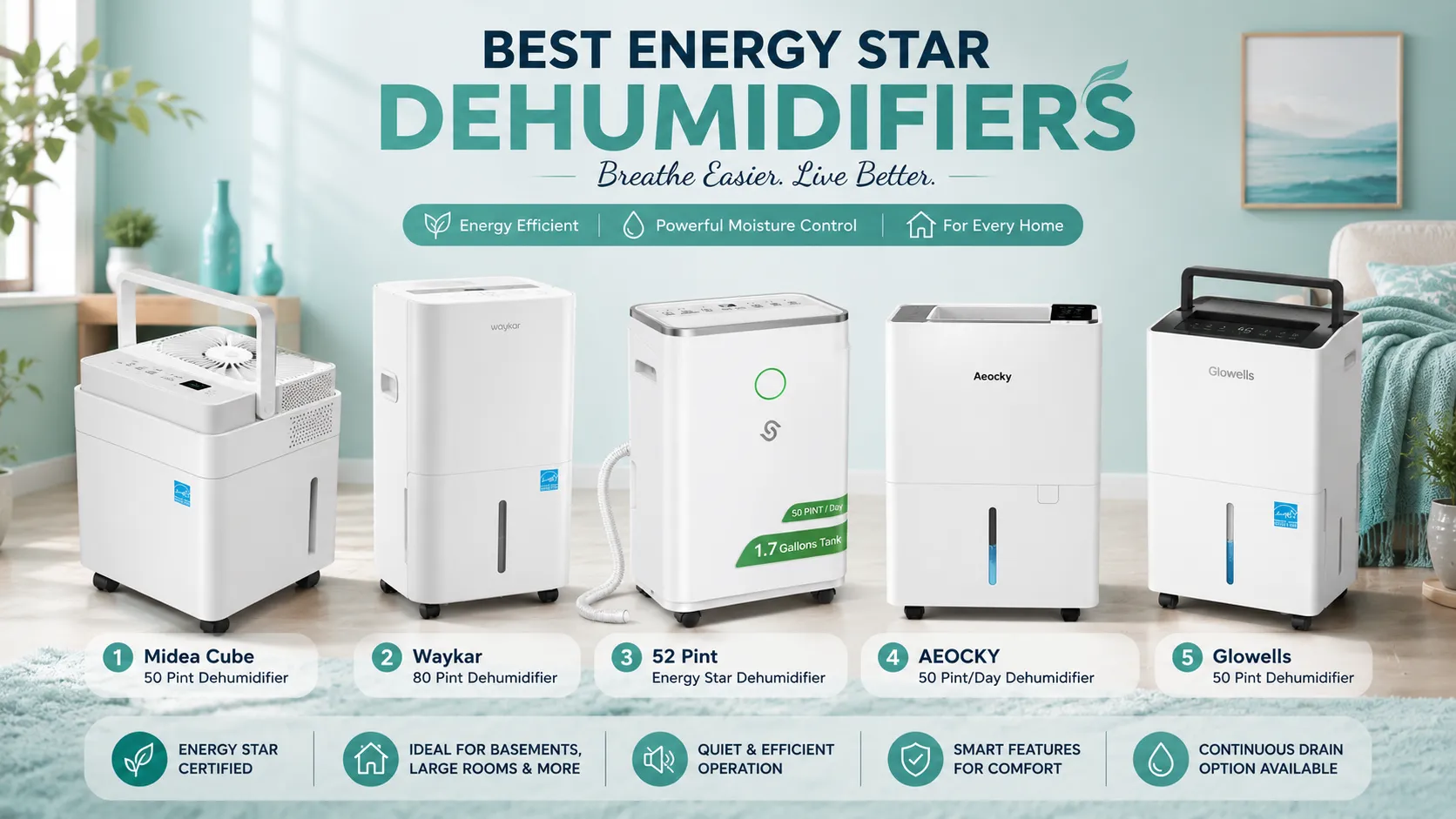
If you feel that the high humidity at your home has made it muggy and musty, then a good dehumidifier can be the answer. Moisture problems can lead to a damp odour, condensation and more due to excessive water content in air. A good device can help you keep the humidity and temperature indoors comfortable and control excess moisture. Also, if you are concerned about electricity consumption, choosing an ENERGY STAR rated model can be an important part of your buying decision.
In this piece, I went over all five of the dehumidifiers that were sent to me by Amazon, including a basement model, a large room model with continuous drainage, etc. Each no option has unique strengths. So, the ideal choice will depend on your available room size, desired capacity, drainage setup, noise sensitivity, and budget.
Quick Comparison of the Best Energy Star Dehumidifiers
| Product | Listed Coverage | Capacity | Best For |
|---|---|---|---|
| Midea Cube 50 Pint | 4,500 sq. ft. | 50 pint | Large basements and whole-home moisture control |
| Waykar 80 Pints | 5,000 sq. ft. | 80 pint | Very humid large spaces |
| 52 Pint Energy Star Dehumidifier | 4,500 sq. ft. | 52 pint | Smart humidity control |
| AEOCKY Compressor Dehumidifier | 3,500 sq. ft. | 50 pint/day | Energy-conscious homeowners |
| 50 Pint Basement Dehumidifier | 4,500 sq. ft. | 50 pint | Continuous drainage and large rooms |
1. Midea Cube 50 Pint Dehumidifier for Basement, 4,500 Sq. Ft. – Energy Star
The Midea Cube 50 Pint is a great option for homeowners looking for a space-saving design with big capacity. The square type design differs significantly from many upright versions. The capacity to collect a lot of water means you will empty it less often.
They have dehumidifiers that are quite powerful with a rate of 9 litres per hour. It certainly is powerful and useful when it comes to moisture in a room. You should make the most of high-performance dehumidifiers because we are likely to have more of that this winter.
Key Features
- 50-pint dehumidification capacity
- Listed coverage of up to 4,500 sq. ft.
- ENERGY STAR-focused energy efficiency
- Compact cube-style design
- Large water collection capacity
- Suitable for basements and large rooms
- Designed for convenient moisture management
- Smart-control features may be available depending on the model/version
Pros
- Large capacity for substantial moisture problems
- Space-efficient cube design
- Good option for basements
- Large collection capacity
- Convenient for longer periods of operation
- Suitable for larger homes and rooms
Cons
- Cube design may not suit every room layout
- Larger capacity can mean a higher initial purchase price
- Users with smaller rooms may not need this much capacity

Best For
The Midea Cube is best for homeowners who need an efficient, high-capacity dehumidifier for a basement, large room, or extensive moisture problem.
2. Waykar 80 Pints 5,000 Sq. Ft. 2025 Energy Star Dehumidifier for Basement
This model has a coverage area of up to 5,000 square feet. As a result, the Waykar 80-pint model is most appropriate for people who want a lot of moisture removal. A dehumidifier of this type could be useful for damp basements, large storage occasions, garages and other places where the humidity is high. A powerful unit with a larger capacity may also make sense for homeowners rather than a compact bedroom model.
Key Features
- 80-pint capacity
- Listed coverage of up to 5,000 sq. ft.
- Designed for basement use
- Energy-efficient design
- Suitable for large spaces
- Drain hose support
- Automatic humidity management
- Designed for extended operation
Pros
- Very high moisture-removal capacity
- Suitable for large areas
- Good choice for damp basements
- Continuous drainage can reduce manual emptying
- Useful for severe humidity conditions
Cons
- Larger than compact residential dehumidifiers
- May be excessive for small rooms
- Higher capacity can increase the purchase price
- Requires sufficient floor space and airflow around the unit

Best For
The Waykar 80-pint model is best for large basements, garages, and homes where humidity is consistently high and a powerful dehumidifier is required.
3. 4,500 Sq. Ft. Energy Star Dehumidifier for Home Basement, 52 Pint Large Room Dehumidifier
This model with a capacity of 52 pints offers useful humidistats. This dehumidifier has an area coverage of 4,500 square feet, which means it is aimed at homeowners who need more moisture removal than a small-room dehumidifier can provide.
Smart humidity control is one of its most useful features. A dehumidifier that doesn’t have a continuous feature will simply work continuously. Yet a dehumidifier with humidity control adjusts operation to keep humidity at its preferred setting.
Key Features
- 52-pint capacity
- Listed coverage of up to 4,500 sq. ft.
- ENERGY STAR positioning
- Smart humidity control
- Water tank and drain hose options
- Automatic shutoff
- Large-room design
- Auto-defrost functionality
Pros
- Good capacity for large rooms
- Smart humidity control
- Suitable for basement applications
- Supports convenient drainage
- Auto-defrost can be useful in cooler environments
- Good balance between capacity and functionality
Cons
- May be too powerful for a small bedroom
- Water tank still requires occasional attention if continuous drainage is not used
- Large-room design takes more space than compact units

Best For
This model is best for homeowners who want smart humidity control and large-area moisture removal for a basement or large room.
Read also : Best Moisture Absorbers for Attic: 5 Options for Humidity Control
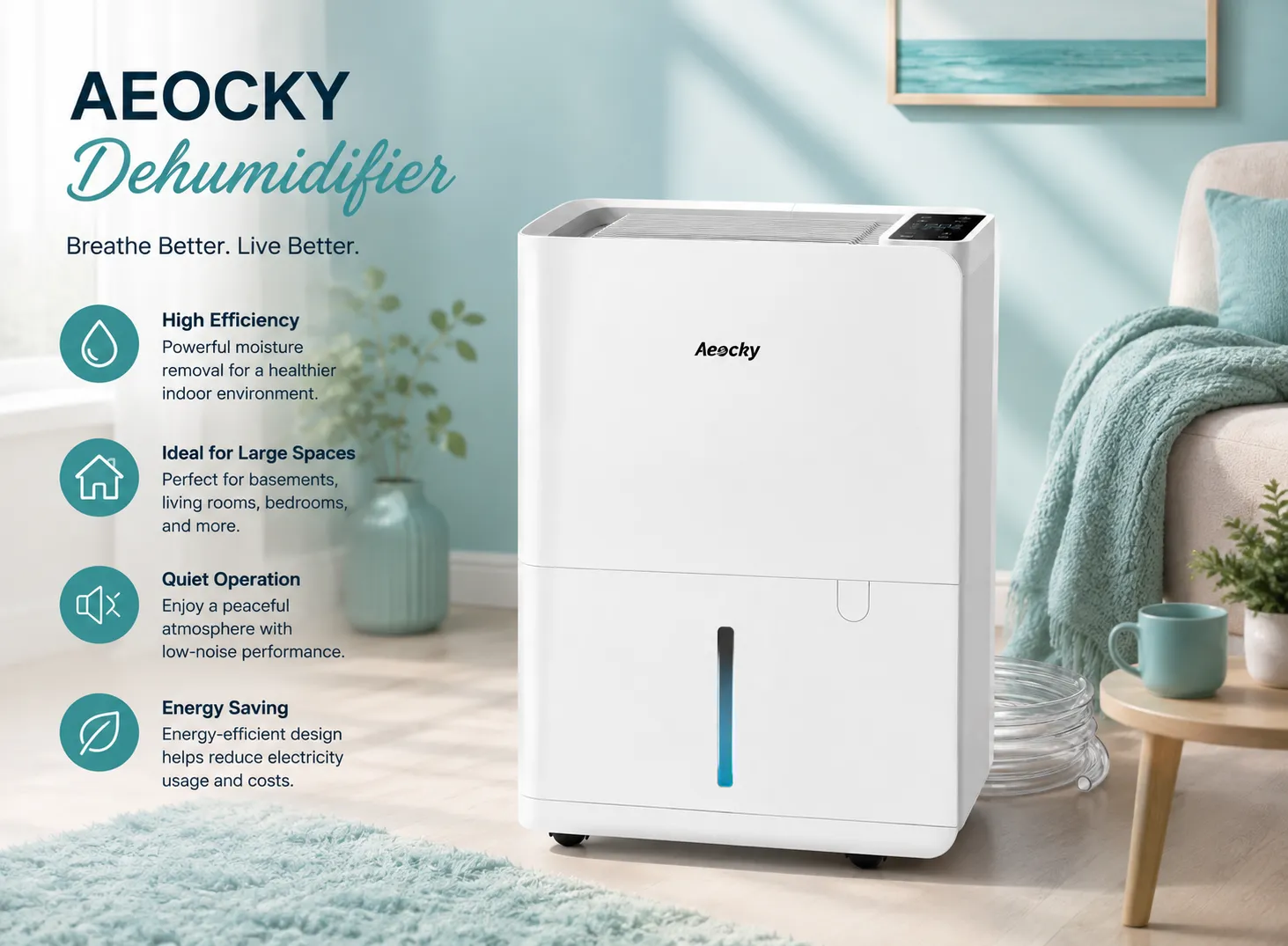
4. AEOCKY 50 Pint/Day, 3,500 Sq. Ft. Compressor Dehumidifier with Drain Hose
AEOCKY 50 Pint Compressor Dehumidifier is designed for homeowners who want moisture removal power without the energy costs. Due to the compressor-based system it employs, it is ideal for larger home spaces where humidity can be a persistent issue.
An area of 3,500 sq. Listed in ft. is smaller than the other gadgets we have reviewed till date. In this way, the Waykar WiFi 6 Mesh WiFi Router System is a good choice for a middle-of-the-road option. It won’t be enough for 5,000 sq. This( 5 words ) ft.length which is more for.
Key Features
- 50-pint/day capacity
- Listed coverage of up to 3,500 sq. ft.
- Compressor-based dehumidification
- Drain hose included
- Designed for continuous drainage
- Suitable for basements and large rooms
- Humidity-control functionality
- Energy-conscious design
Pros
- Strong moisture-removal performance
- Good size for medium-to-large spaces
- Drain hose provides convenient continuous drainage
- Compressor technology is suitable for substantial humidity
- More appropriately sized than an 80-pint unit for some homes
Cons
- Not as high-capacity as the Waykar 80-pint model
- Compressor operation can produce more sound than very small units
- Users with very small spaces may prefer a compact model
Best For
The AEOCKY 50-pint model is best for homeowners who need reliable moisture removal in spaces up to around 3,500 square feet and want convenient hose drainage.
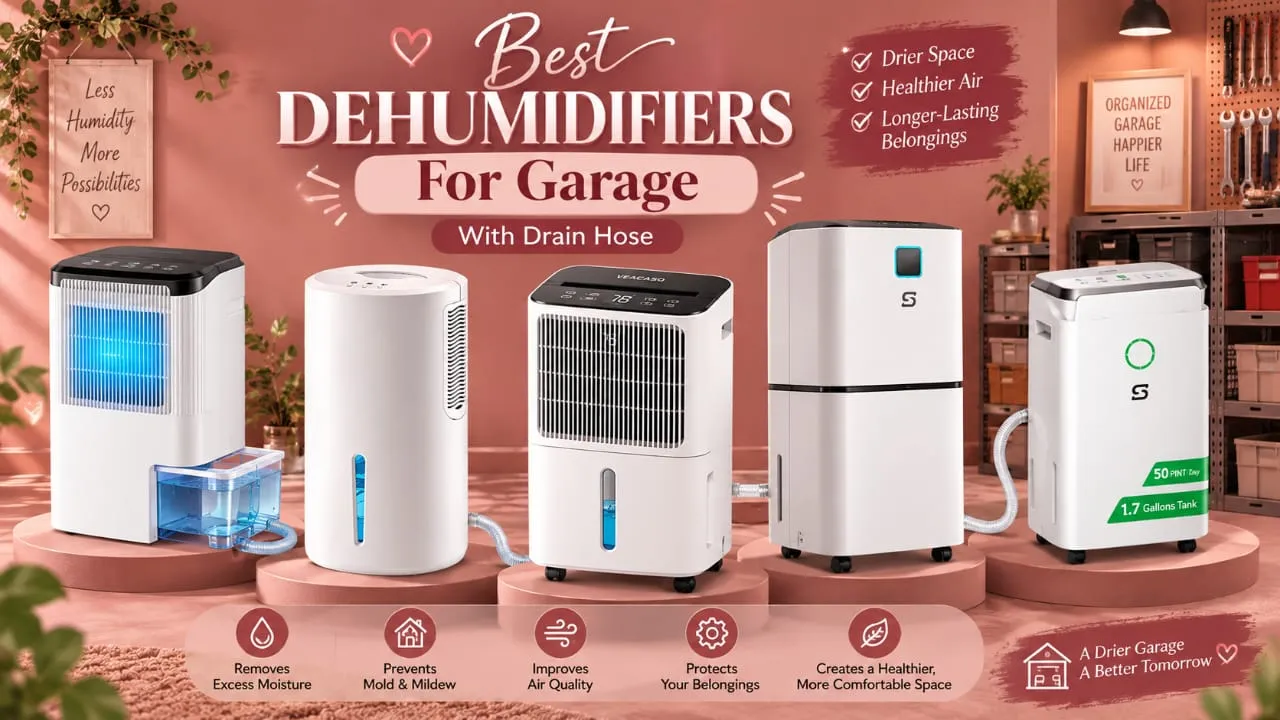
5. 50 Pint Dehumidifier for Basement with Drain Hose, 4,500 Sq. Ft., 1.7-Gallon Tank
This 50-pint dehumidifier is another practical option for basement and large-room applications. Its listed 4,500-square-foot coverage makes it suitable for homeowners dealing with excess moisture across a relatively large area.
The 1.7-gallon tank provides a reasonable water-storage capacity, while the drain hose option can be more convenient when the unit needs to operate for extended periods. Continuous drainage is particularly helpful in basements because you can connect the hose to an appropriate drain rather than repeatedly carrying a full tank.
Key Features
- 50-pint capacity
- Listed coverage of up to 4,500 sq. ft.
- 1.7-gallon water tank
- Drain hose support
- Designed for basement use
- Automatic humidity control
- Auto shutoff
- Large-room operation
Pros
- Good capacity for large rooms
- Large 1.7-gallon tank
- Drain hose improves convenience
- Suitable for basements
- Good choice for extended operation
- Large coverage area
Cons
- Requires appropriate drainage setup for continuous operation
- May be oversized for smaller rooms
- Manual tank emptying is still necessary when hose drainage is not used

Best For
This 50-pint model is best for basement owners who want a large-capacity unit with both a sizable water tank and drain-hose capability.
Which Energy Star Dehumidifier Should You Choose?
Choosing between these five models depends mainly on the size and humidity level of your space.
For a large basement, the Midea Cube 50 Pint is an appealing choice because of its cube design, high capacity, and large-area positioning.
For extremely humid and very large spaces, the Waykar 80-pint model stands out because it offers the highest listed capacity and coverage among these five options.
If smart humidity control is your priority, the 52-pint ENERGY STAR model is worth considering. Its combination of large coverage and humidity management makes it useful for basements and large rooms.
For a medium-to-large area, the AEOCKY 50-pint model offers a more moderate 3,500-square-foot coverage rating and includes a drain hose for easier operation.
Finally, the 50-pint, 4,500-square-foot model with a 1.7-gallon tank is a practical option for basement owners who want both tank storage and continuous drainage.
What to Look for in an Energy Star Dehumidifier
Before buying a dehumidifier, do not focus only on the pint rating. Several other factors can affect how useful and economical the unit will be.
Room Size
Always compare the manufacturer’s recommended coverage with the size of your room or basement. A unit designed for 4,500 square feet may be unnecessary for a small bedroom.
Moisture Level
A mildly humid room does not require the same capacity as a consistently damp basement. If your space has serious humidity problems, a larger-capacity model may be more appropriate.
ENERGY STAR Certification
ENERGY STAR certification is important for shoppers who want improved energy efficiency. However, it is still worth checking the exact model number and current certification information because product names and model versions can change.
Continuous Drainage
A drain hose can be extremely useful when operating a dehumidifier for long periods. Instead of manually emptying the tank, water can flow toward a suitable drain when the setup allows it.
Tank Capacity
If you cannot use a drain hose, consider the size of the water tank. A larger tank generally means you may need to empty it less frequently.
Humidity Control
A built-in humidistat or smart humidity control can make operation more convenient. It allows the unit to respond to the humidity level rather than simply running continuously.
Auto Shutoff
Automatic shutoff is an important convenience and safety feature. When the collection tank becomes full, the dehumidifier can stop instead of allowing the tank to overflow.
Are Energy Star Dehumidifiers Good for Basements?
Yes, an ENERGY STAR-certified dehumidifier can be a good choice for a basement because basements often experience higher humidity than other areas of a home.
A suitable basement dehumidifier should have enough capacity for the space and should ideally support continuous drainage. This is particularly helpful if you expect the machine to run frequently.
For a large basement, the 50-pint to 80-pint options in this list may be more appropriate than small portable units designed for bedrooms.
How to Save Electricity When Using a Dehumidifier
Even an efficient dehumidifier can consume unnecessary electricity if it is operated incorrectly. Set a reasonable humidity target instead of forcing the machine to run continuously.
Keep doors and windows closed while the unit is operating in a conditioned space. Clean the filter according to the manufacturer’s recommendations and make sure air can circulate freely around the machine.
You should also address sources of moisture whenever possible. Fixing leaks, improving ventilation, and controlling water intrusion can reduce the amount of work your dehumidifier needs to do.
What is the best ENERGY STAR dehumidifier?
There is no single best model for every home. Among these five options, the Midea Cube 50 Pint is a strong overall choice for large basements because it combines substantial capacity with a distinctive space-saving design.
For very large and highly humid areas, the Waykar 80-pint model may be more suitable because of its higher listed capacity and coverage.
Which dehumidifier is most energy efficient?
The most energy-efficient choice should be determined by the exact model’s current ENERGY STAR certification and energy-performance specifications rather than pint capacity alone.
A larger dehumidifier is not automatically less efficient. In some situations, using a properly sized efficient unit can remove moisture more effectively than running an undersized unit continuously.
Which brand of dehumidifier is best?
Midea, Waykar, and AEOCKY are among the brands represented in this product selection. The best brand depends on your priorities, including capacity, drainage, controls, warranty, price, and availability.
For buyers choosing from these five products, comparing the exact model specifications and current Amazon reviews is more useful than choosing solely by brand name.
Is an ENERGY STAR dehumidifier worth it?
For many homeowners, yes. If your dehumidifier operates frequently, energy efficiency can become an important consideration because electricity usage accumulates over time.
An ENERGY STAR-certified model can be particularly attractive for damp basements and other spaces where the machine needs to run regularly. However, you should also choose the correct capacity for your space because buying an oversized unit solely for its efficiency rating may not always be the most practical decision.
Conclusion
Choosing the best ENERGY STAR dehumidifier is about more than selecting the model with the highest pint rating. You should consider the size of your space, humidity level, energy efficiency, tank capacity, drainage options, controls, and overall convenience.
The Midea Cube 50 Pint is a strong all-around option for large basements, while the Waykar 80-pint model is better suited to very large and highly humid spaces. The 52-pint model offers useful smart humidity control, the AEOCKY 50-pint model provides a good middle-ground option, and the 50-pint basement model with a 1.7-gallon tank is worth considering if convenient drainage is a priority.
Before purchasing, always check the current Amazon listing for the exact model, specifications, ENERGY STAR status, warranty information, price, and customer reviews. This will help you choose the dehumidifier that best matches your home’s moisture-control needs.
Frequently Asked Questions
How many pints should a basement dehumidifier have?
The appropriate capacity depends on basement size and humidity level. For larger or very damp basements, a 50-pint or higher model may be more appropriate than a small-room dehumidifier.
Should I use a drain hose with my basement dehumidifier?
A drain hose is useful when you want the dehumidifier to operate for long periods without manually emptying the water tank. You need a suitable drain location and the hose must be installed according to the manufacturer’s instructions.
Is a 50-pint dehumidifier enough for a large basement?
A 50-pint model can be suitable for many large basements, but the correct choice depends on the actual area and moisture conditions. Extremely damp or larger spaces may benefit from a higher-capacity unit.
Does ENERGY STAR mean a dehumidifier uses very little electricity?
Not necessarily. ENERGY STAR indicates that a product meets specific energy-efficiency criteria. Actual electricity consumption still depends on the model, operating conditions, settings, room humidity, and how frequently the unit runs.
How often should I clean my dehumidifier?
Follow the manufacturer’s maintenance instructions. In general, regularly checking and cleaning the air filter helps maintain airflow and performance.
Can I leave a dehumidifier running all day?
Many dehumidifiers are designed for extended operation, but you should follow the manufacturer’s instructions. Using a humidity-control setting and continuous drainage can make longer operation more convenient.
What humidity level should I maintain?
For many homes, maintaining indoor relative humidity around 30% to 50% is a commonly recommended range. The ideal setting can vary depending on the room, season, comfort, and moisture conditions.



1 Comment
[…] Read also : Best Energy Star Dehumidifiers: 5 Top Picks for Efficient Moisture Control […]